Does DYNVOLT replace my CMMS?+
No — we expose a REST API and webhooks you can integrate with your CMMS (documented at developers.dynvolt.com). Tickets created from alerts carry full asset context. Pre-built connectors for specific CMMS products are on the integration roadmap, prioritised by customer demand — tell us which one you run.
How are alerts prioritized?+
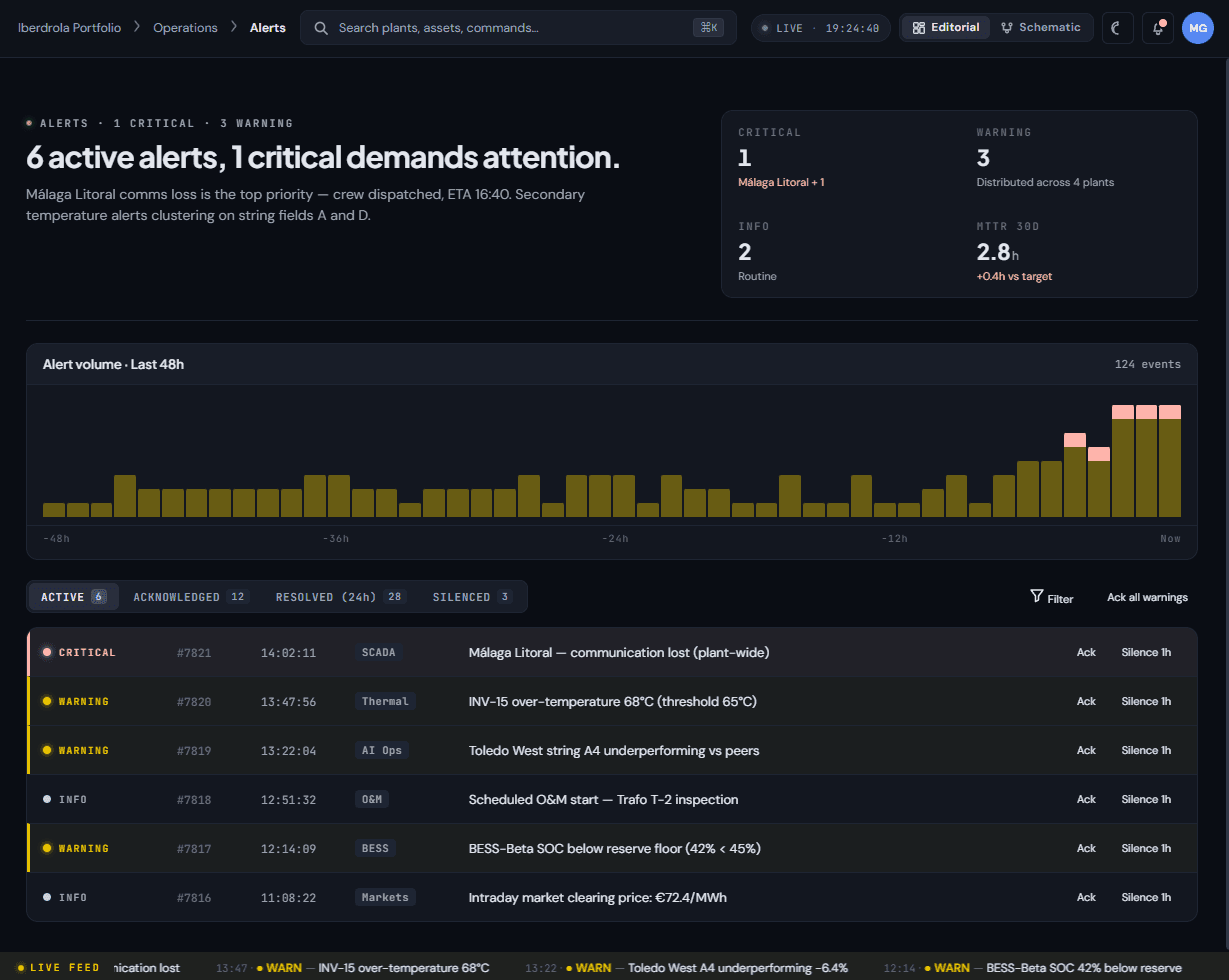
Detection is peer-relative rather than threshold-based — a string must fall below 70% of its same-orientation peer average, persist across multiple days, and survive curtailment suppression before a ticket opens. Severity is then classified Critical / High / Medium / Low. Ranking by revenue at risk is on our roadmap.
What detection ships out of the box?+
Peer-relative string underperformance, expected-vs-measured current deviation, I-V and soiling analysis with multi-day persistence, per-inverter derating watchdogs, sensor-fault detection, and BESS alarm decode — built and tuned on our own production plants, where the real catches on record include string underperformers, inverter insulation self-trips, and failed weather sensors.
Can field techs use it on mobile?+
Yes — the work-order UI is a responsive web app: crews open and close tickets with comments from any phone browser, nothing to install. A dedicated native field app is on the roadmap; the web app covers field work today.